
Author: Chitra Banerjee Divakaruni
Year: 2008
Genre: Mythological Fiction, Historical Fiction, Retelling
Rating: 4.5/5
The Palace of Illusions is a retelling of the Mahabharata from Draupadi’s perspective. The story follows her life from her mysterious birth and childhood to her marriage to the five Pandavas, her experiences as a queen, and the events that eventually lead to the great war of Kurukshetra. Along the way, it explores her relationships with Krishna, the Pandavas, and Karna, while showing her struggles with love, power, ambition, revenge, and destiny.
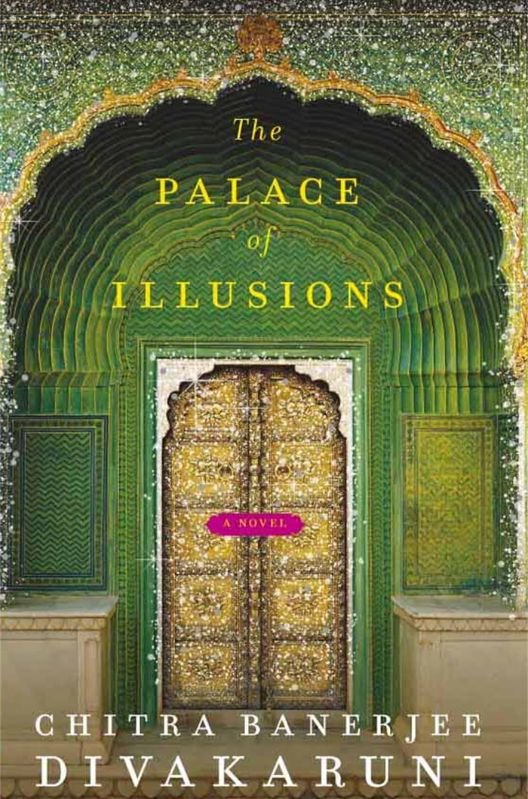
The Palace of Illusions brings one of India’s greatest epics to life through a deeply personal perspective. Instead of telling the Mahabharata as a story of kings, warriors, and battles, Chitra Banerjee Divakaruni places Draupadi at the centre and explores the woman behind the legend.
Draupadi is presented as intelligent, ambitious, curious, and strong-willed, but she is also shown with her weaknesses and contradictions. She wants to control her own life, yet repeatedly finds herself caught between expectations, relationships, and circumstances beyond her control. This makes her character feel remarkably human.
The relationships are one of the strongest parts of the novel. Her complicated marriage to the five Pandavas, her deep friendship with Krishna, and her unexplained connection with Karna add layers to the story. These relationships allow the reader to see familiar characters from a more emotional and personal angle.
The novel also explores themes of love, ambition, power, identity, revenge, fate, and the position of women in a patriarchal society. Draupadi's journey shows how personal choices can become intertwined with larger events and how the desire for justice can sometimes turn into a desire for revenge.
Divakaruni's writing makes the ancient world accessible and vivid. Palaces, royal courts, forests, battles, and relationships are described in a way that feels immersive without becoming difficult to follow. The story is particularly effective when it focuses on Draupadi's thoughts and emotions.
However, this is a creative retelling rather than a completely faithful version of the original Mahabharata. Some characters, relationships, and events are interpreted through the author's imagination. Readers familiar with the epic may therefore notice significant differences from traditional versions.
Overall, The Palace of Illusions offers a fresh way to experience a story that many Indian readers already know. Its greatest strength is not simply retelling the Mahabharata, but making us reconsider Draupadi as a person with her own desires, fears, choices, and regrets. It is a compelling read for anyone interested in mythology, Indian history, and stories that give a new voice to familiar characters.Type your paragraph here