
Author: Aravind Adiga
Year: 2008
Genre: Literary Fiction, Social Satire
Rating: 4.5/5
Summary
The White Tiger follows Balram Halwai, a young man from a poor village who grows up determined to escape poverty and the rigid social system that keeps people like him at the bottom. He eventually becomes a driver for a wealthy family in Delhi and gets a close look at the lives of India's rich and powerful. As he struggles with exploitation, inequality, corruption, and his own ambitions, Balram decides that escaping the system may require him to break its rules.
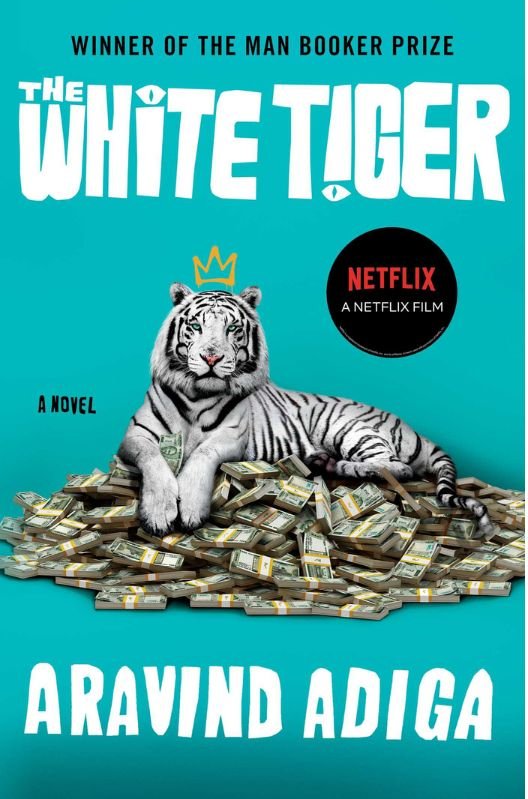
The White Tiger is a sharp and unapologetic look at class inequality, poverty, corruption, and ambition in modern India. Aravind Adiga tells the story through Balram's own voice, making the novel feel personal, darkly humorous, and often uncomfortable.
Balram is not a conventional hero. He is intelligent, ambitious, observant, and determined, but he is also manipulative and morally complicated. His greatest desire is to escape the "Rooster Coop"—the cycle of poverty, obedience, and social expectations that keeps people like him trapped. His transformation from a poor village boy into a successful businessman forms the heart of the story.
One of the book's biggest strengths is its portrayal of the gap between India's wealthy and poor. Balram works inside wealthy households and sees both the privileges enjoyed by his employers and the humiliation experienced by the people who serve them. Through his experiences, the novel questions whether hard work alone is enough to overcome a deeply unequal system.
The book also takes a critical look at corruption. Politicians, businessmen, police officers, and ordinary people all become part of a system where money and influence often matter more than morality. Adiga does not present this world in a completely black-and-white way; instead, he shows how people can become products of the systems they live in.
The writing is one of the novel's strongest features. Balram's narration is sarcastic, direct, and darkly funny. His observations can be amusing one moment and disturbing the next. This unusual voice keeps the story engaging while making its social commentary more powerful.
What makes the novel particularly interesting is that it does not ask you to completely admire or condemn Balram. His actions become increasingly difficult to justify, forcing the reader to think about the price of freedom and success. Is escaping an unjust system worth becoming morally compromised yourself?
Overall, The White Tiger is a powerful and thought-provoking novel that goes beyond a simple story of poverty and success. It examines the uncomfortable relationship between ambition and morality while offering a harsh critique of class inequality in India.
Verdict: Dark, intelligent, and provocative—a story about what a person may be willing to sacrifice to escape the life they were born into.